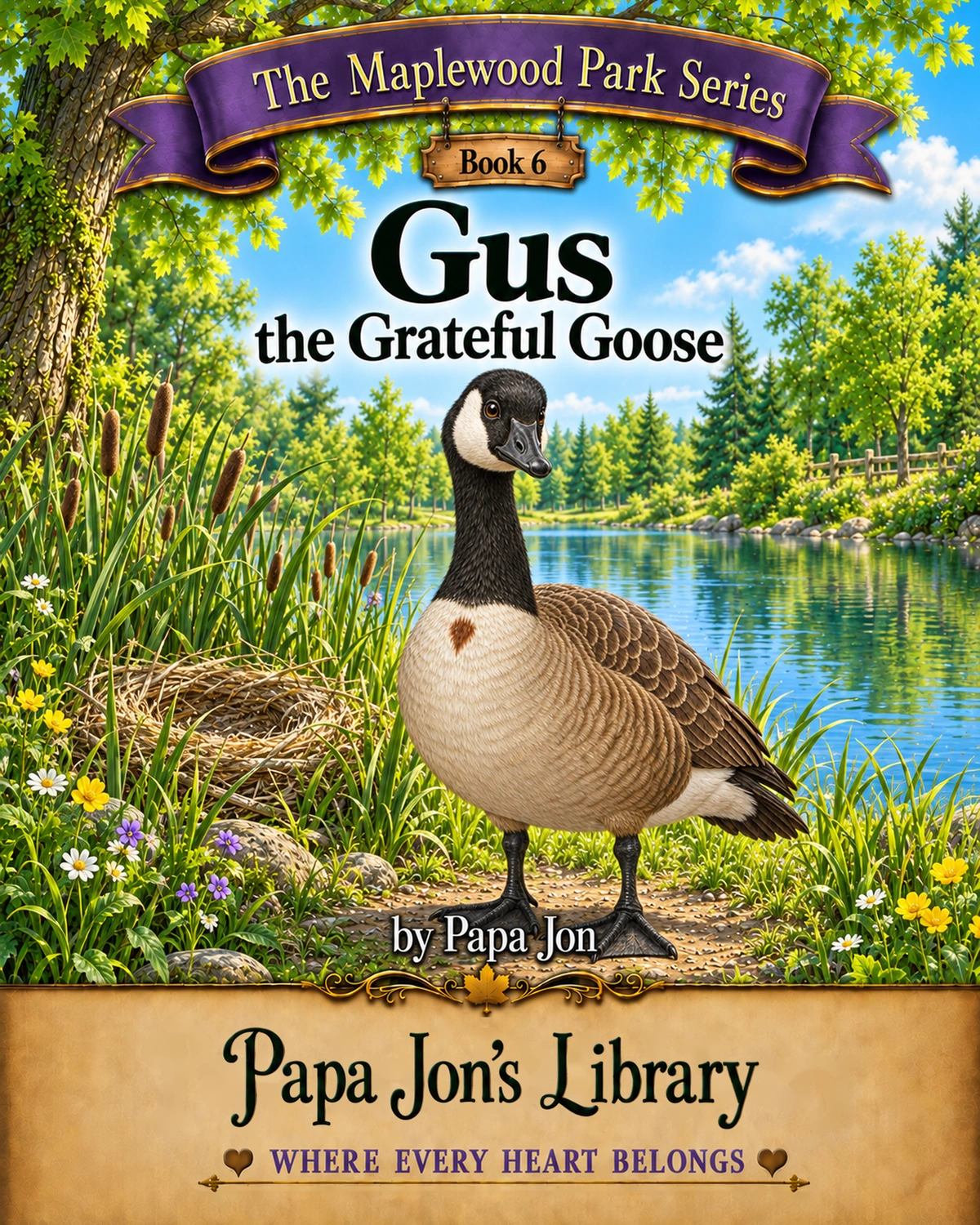
Book 6 · Discussion & activities
Gus the Grateful Goose
Familiar things can still be worth noticing and appreciating.
Gus knows his pond so well that it seems ordinary to him. When Jim’s sailboat drifts behind the reeds, that familiar knowledge helps Gus bring it back—and see his home and friendships with fresh appreciation.
Read the story first, then choose a question. Invite children to explain their ideas, point to a clue, or listen to another interpretation.
01 · Remember the story
How did knowing the pond help Gus return Jim’s sailboat?
An answer to explore
Gus knew an opening between the reeds. He swam through it, found the sailboat between two stems, and gently nudged it back toward his friends with his bill.
Return to the story: Revisit pages 13–15. What could Gus do that the children could not do from the shore?
02 · Think a little deeper
What changed when Gus began appreciating his familiar pond?
An answer to explore
The pond itself had not changed. Gus began noticing its sheltering reeds, his safe nest, the tender grass, and his friends. Their particular words of thanks helped him recognize the value of a place he knew well.
Follow-up: Can something feel ordinary and still matter? Were the children able to enjoy this morning and look forward to the beach at the same time?
Return to the story: Compare pages 8–11 with pages 16–22.
03 · Carry it with you
What is one familiar thing or kind action you could appreciate today?
An answer to explore
You might notice a favorite place to read, a familiar game, or someone making time to listen. If you want to thank someone, name what they did and why it mattered to you: “Thank you for helping me find my book. I wanted to read it with you.”
Follow-up: What makes a particular thank-you different from a general one? Children can choose their own example or use a pretend situation.
For the adult: noticing value and expressing appreciation
The children’s thanks are specific: Jim values the returned boat, John recognizes Gus’s knowledge, and Emma appreciates their shared morning. Ask how these different observations help Gus notice several kinds of contribution, including companionship.
Pages 20–22 make room for both anticipation and appreciation. The children remain excited about the beach while valuing their morning at Maplewood Park. Explore how enjoying something new need not reduce the value of something familiar.
Invite appreciation without demanding a grateful mood. Children can be disappointed, need help, or dislike part of a day while also noticing something good. Avoid using the story to dismiss a concern or insist on thanks. Gus’s friendship and belonging do not depend on perfect manners or repaying a debt.
Try it together · 2 minutes
Notice something familiar
An adult and child each choose one familiar object or part of the room. Take turns saying what they appreciate about it. The adult can model a specific observation without requiring the child to copy it.
Notice the picture
The same pond, another look
Compare pages 8 and 18. Find a familiar detail in the pond setting, then discuss how Gus’s attention changes. Use the words alongside the pictures to support the answer.
Color & talk
A familiar morning with Gus
Color Gus beside his pond and Jim’s little sailboat. His small outlined feather patch high on his chest can be colored chestnut brown. Then talk about a familiar thing or kindness you appreciate.
One page · US Letter (8½ × 11 inches) · Black-and-white
Open & print coloring page Download PDF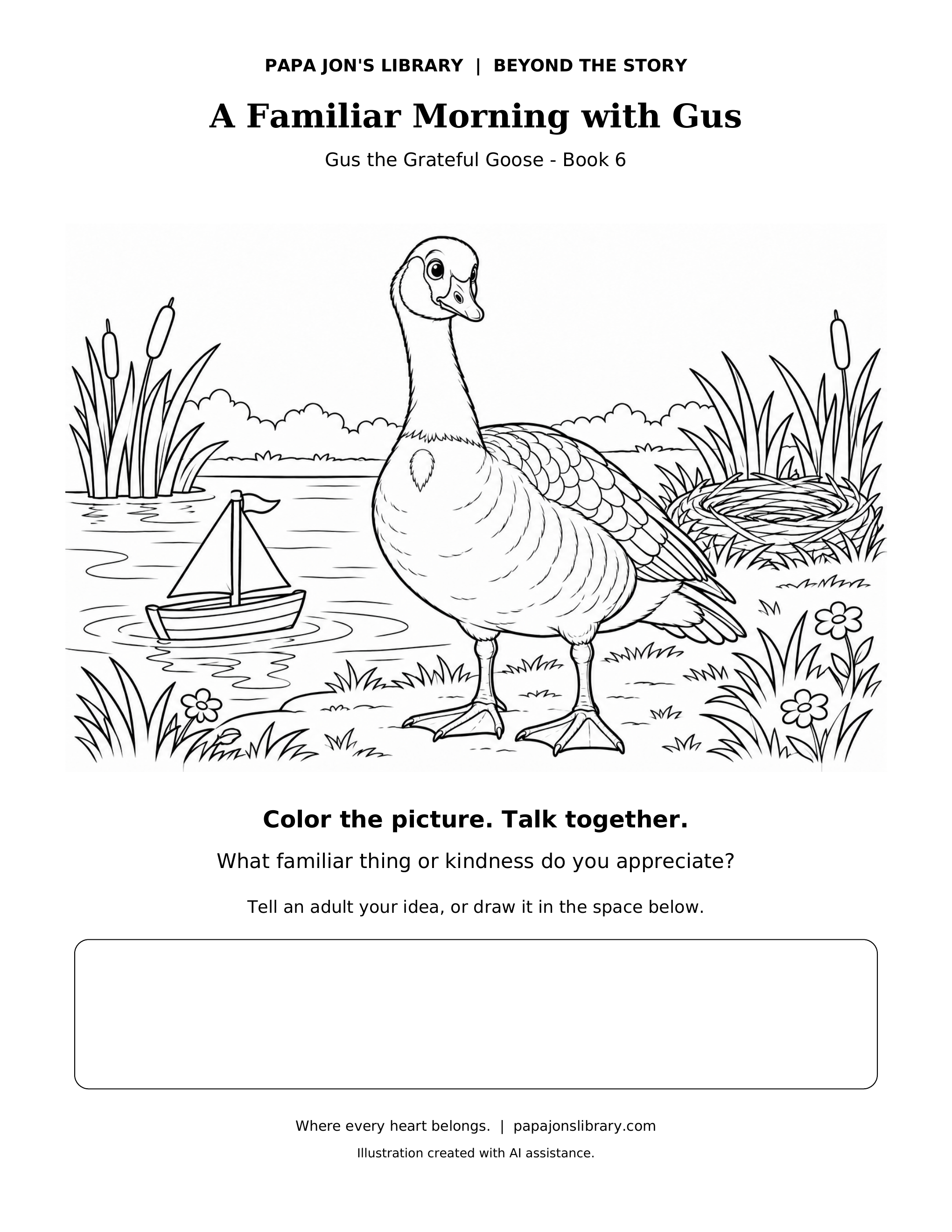
Adapt the conversation to your child or group
Younger children: Point to the boat, nest, or reeds. Ask what Gus liked about his home, then invite a simple example of something the child enjoys.
Older children: Compare what each child thanked Gus for. Discuss how familiarity and looking forward to new experiences can exist alongside appreciation.
Children may draw, point, listen, or use a pretend example. No child needs to share private family circumstances. For real water play, use adult supervision; children should not enter water to retrieve a toy.
Read further · For adults
Continue your own learning
- Reading Rockets · Dialogic Reading: An Effective Way to Read Aloud with Young Children
Grover J. Whitehurst explains ways to invite and expand children’s contributions during shared reading.
- NAEYC · Teaching Emotional Intelligence in Early Childhood
Tominey, O’Bryon, Rivers, and Shapses discuss recognizing feelings and exploring their causes, including through book characters.
- NAEYC · Building Social and Emotional Skills at Home
Practical ideas for families to explore feelings, relationships, and cooperation.
These references support the adult discussion approach. They do not evaluate or endorse Papa Jon’s Library books.