Book 9 · Discussion & activities
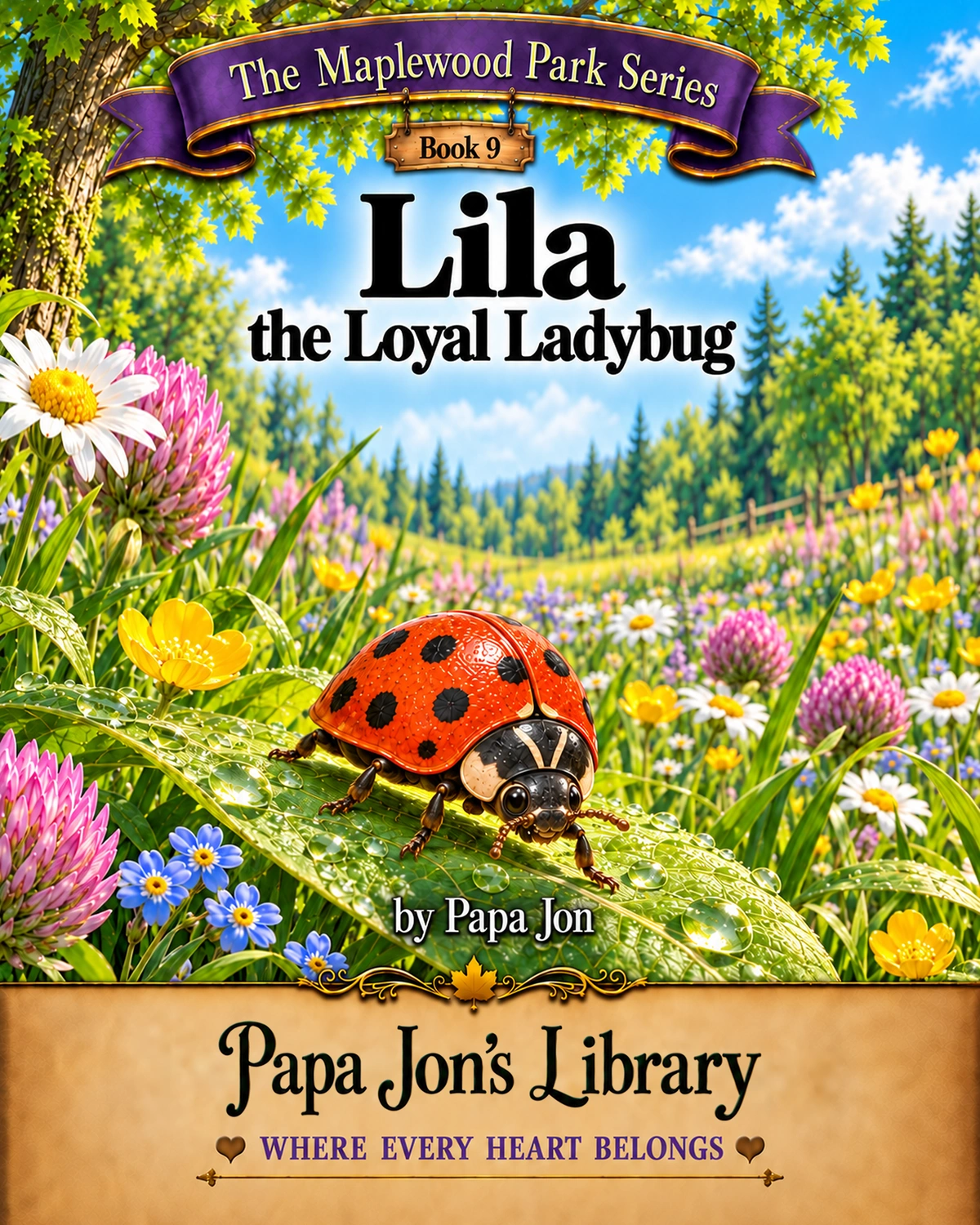
Lila the Loyal Ladybug
Friendships can grow while making room for honest feelings.
Lila is glad Rosie and Pip are friends, but she misses her quiet visits with Rosie. By sharing what she feels and listening in return, Lila discovers that a cherished friendship can continue as other friendships grow.
Read the story first, then choose a question. Invite children to explain their ideas, point to a clue, or listen to another interpretation.
01 · Remember the story
What did Lila tell Rosie, and how did Rosie respond?
An answer to explore
Lila said she missed their unhurried visits and noticing little things together. She also said she was glad Rosie and Pip had become friends. Rosie listened, apologized for the rushed visits, and explained that she still looked forward to seeing Lila.
Return to the story: Revisit pages 14–18. What plan did the two friends make for their visits?
02 · Think a little deeper
How could Lila be happy about Rosie’s new friendship and still miss their old routine?
An answer to explore
Those feelings can exist together. Lila values Pip’s friendship with Rosie and also values the quiet time she and Rosie have shared. Missing that time does not mean she wants Pip excluded. Asking Rosie helps her understand more than guessing alone could.
Follow-up: What does Rosie’s memory of the flower buds tell Lila? How does welcoming Pip to see the new shoot add to their shared moment?
Return to the story: Look at pages 10, 13, 17, and 19–22.
03 · Carry it with you
How could you tell a friend you miss spending time together without asking them to choose between friends?
An answer to explore
You might say, “I miss drawing with you. Could we make time to do that again?” Then listen to the friend’s answer and look for a plan that works for both of you. A friend can care about more than one person, and every activity does not have to include everyone.
Follow-up: What would a caring listener say? Practice with pretend characters if children prefer.
For the adult: feelings, assumptions, and mutual friendship
Separate what Lila observes from what she wonders. Visits have become shorter, but she does not yet know whether Rosie misses their time too. On page 13, she decides to ask. Invite children to identify a story clue and explain which questions the clue cannot answer on its own.
Lila’s conversation names a valued experience rather than demanding exclusivity. Rosie’s response includes listening, an apology, a remembered detail, and a practical plan. Discuss how these actions work together; reassurance is supported by attention and time.
Make room for mixed feelings without labeling a child selfish or disloyal. Loyalty does not require accepting repeated unkindness, hiding hurt, or staying in an unsafe relationship. If a real situation involves exclusion or mistreatment, listen to the child and help them find support rather than promising that every friendship will respond like Rosie’s.
Try it together · 3 minutes
Practice a caring conversation
An adult and child use two pretend characters. One says what they miss and suggests an activity; the other listens and responds. Swap roles. The adult can model a kind response while helping the child make a request that leaves the other character room to answer.
Notice the picture
A small discovery to share
Look at pages 19–21. Find the new shoot and notice how Rosie and Pip look closely without touching it. How does Lila contribute something the larger friends might have missed?
Color & talk
A garden moment with Lila
Color Lila beside a leaf and a new shoot in her Wildflower Garden. Her thirteen outlined wing-cover spots can be colored black, her wing covers warm orange-red, and her two outlined converging markings just behind her head pale cream. Then talk about how friends can make time to listen and share a small discovery.
One page · US Letter (8½ × 11 inches) · Black-and-white
Open & print coloring page Download PDF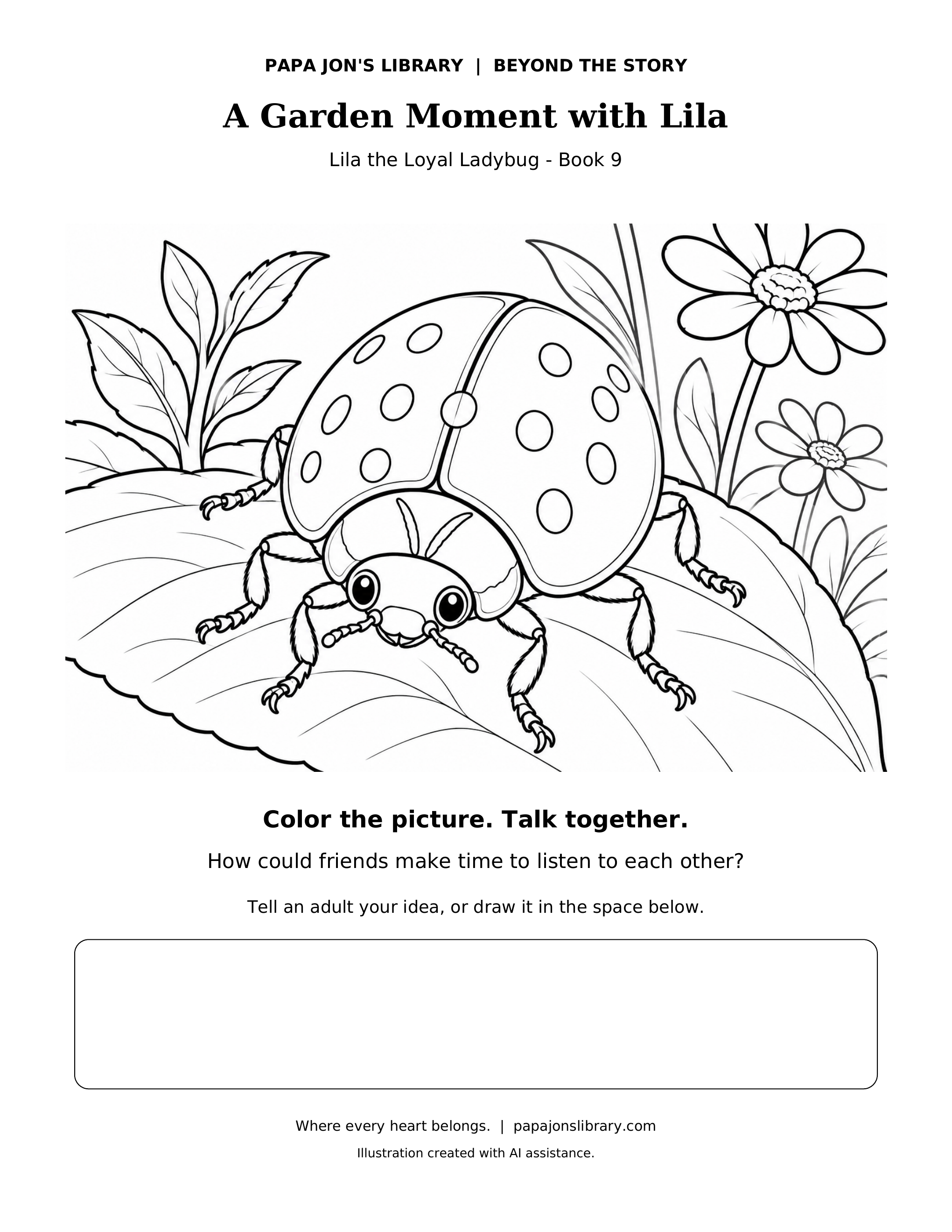
Adapt the conversation to your child or group
Younger children: Ask what Lila wanted to share with Rosie. Practice a short request, such as “Can we look at this together?”
Older children: Compare an observation, an assumption, and a question in Lila’s situation. Discuss how friends can enjoy both time together and other friendships.
Children may draw, point, listen, or use pretend examples. Do not require anyone to name a real friend or describe a private disagreement.
Read further · For adults
Continue your own learning
- Reading Rockets · Dialogic Reading: An Effective Way to Read Aloud with Young Children
Grover J. Whitehurst explains ways to invite and expand children’s contributions during shared reading.
- NAEYC · Teaching Emotional Intelligence in Early Childhood
Tominey, O’Bryon, Rivers, and Shapses discuss recognizing feelings and exploring their causes, including through book characters.
- NAEYC · Building Social and Emotional Skills at Home
Practical ideas for families to explore feelings, relationships, and cooperation.
These references support the adult discussion approach. They do not evaluate or endorse Papa Jon’s Library books.