Book 3 · Discussion & activities
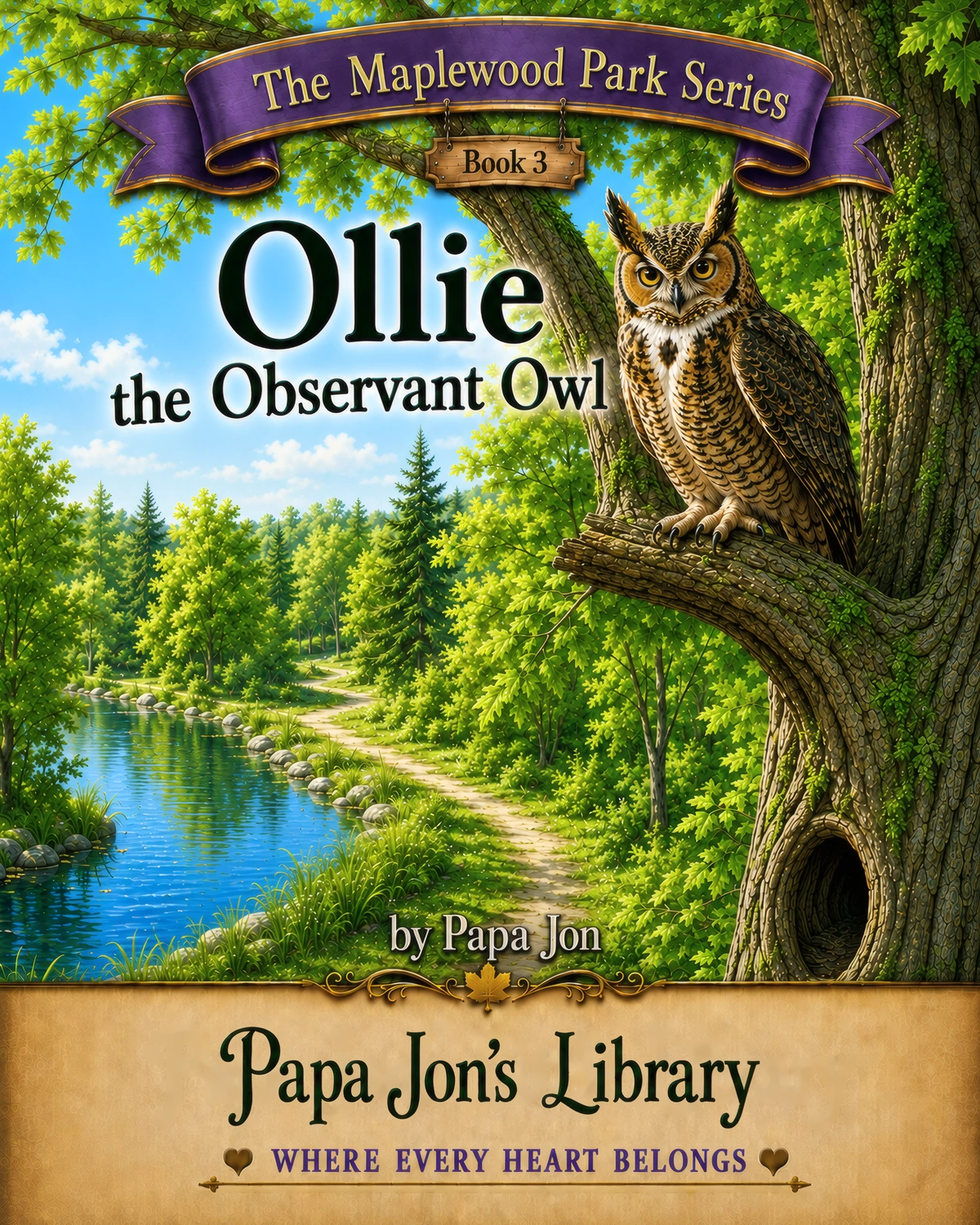
Ollie the Observant Owl
One thoughtful step can be enough to begin.
After a windy night, Ollie worries about what he cannot see along the path. His friends listen, help him notice what he knows, and join him in looking carefully ahead.
Read the story first, then choose a question. Give children room to explain, point to a clue, or listen to someone else’s idea.
01 · Remember the story
What did Ollie know for certain when Emma asked him?
An answer to explore
He knew the beginning of the path was clear and the wind had stopped. He could check what was visible even though he could not see around every turn.
Return to the story: Revisit pages 12–14. How does John’s suggestion help the friends decide what to do next?
02 · Think a little deeper
Why was it useful for Ollie and John to look from different places?
An answer to explore
John spotted a branch from the ground that Ollie had not seen from above. From his perch on a branch farther along the path, Ollie spotted mud and helped the group find a drier route. Each noticed something useful.
Follow-up: Does missing one detail mean someone’s observations are worthless? How did sharing what they noticed help the group?
Return to the story: Compare pages 18–19.
03 · Carry it with you
When a new task feels uncertain, what small thing could you check or try first?
An answer to explore
You could find out what the task needs, ask a trusted adult for help, or try one manageable part. Then pause and decide what comes next.
Follow-up: What would tell you to stop and ask for more help? Beginning thoughtfully includes checking, not rushing.
For the adult: evidence, uncertainty, and shared perspective
The story distinguishes a possible problem from something observed. Ollie’s concerns deserve listening; the friends do not promise that the whole path is clear. Instead, they check the visible beginning and look again as they move.
Invite children to separate “What do we know?” from “What do we still need to find out?” This supports a conversation about reasoning with evidence while allowing uncertainty to remain.
John’s and Ollie’s different views also show that one person need not notice everything. Ask how the group’s understanding changes when each shares a detail. For real outdoor situations, an adult should assess hazards and supervise; the story is a discussion starting point, not a rule that every unknown situation should be entered.
Try it together · 2 minutes
What can we see?
Place a familiar toy partly behind a book. Take turns describing only what you can see and what you are guessing. Move the book, then compare your guesses with the new view.
Notice the picture
Two views of the path
Compare pages 18 and 19. Where are John and Ollie? Ask what each position helps them notice, using a detail from the words or pictures.
Color & talk
A thoughtful look with Ollie
Color Ollie beside the woodland path. His small outlined chest spot can be colored dark brown. Then talk about something you can notice before choosing what to do next.
One page · US Letter (8½ × 11 inches) · Black-and-white
Open & print coloring page Download PDF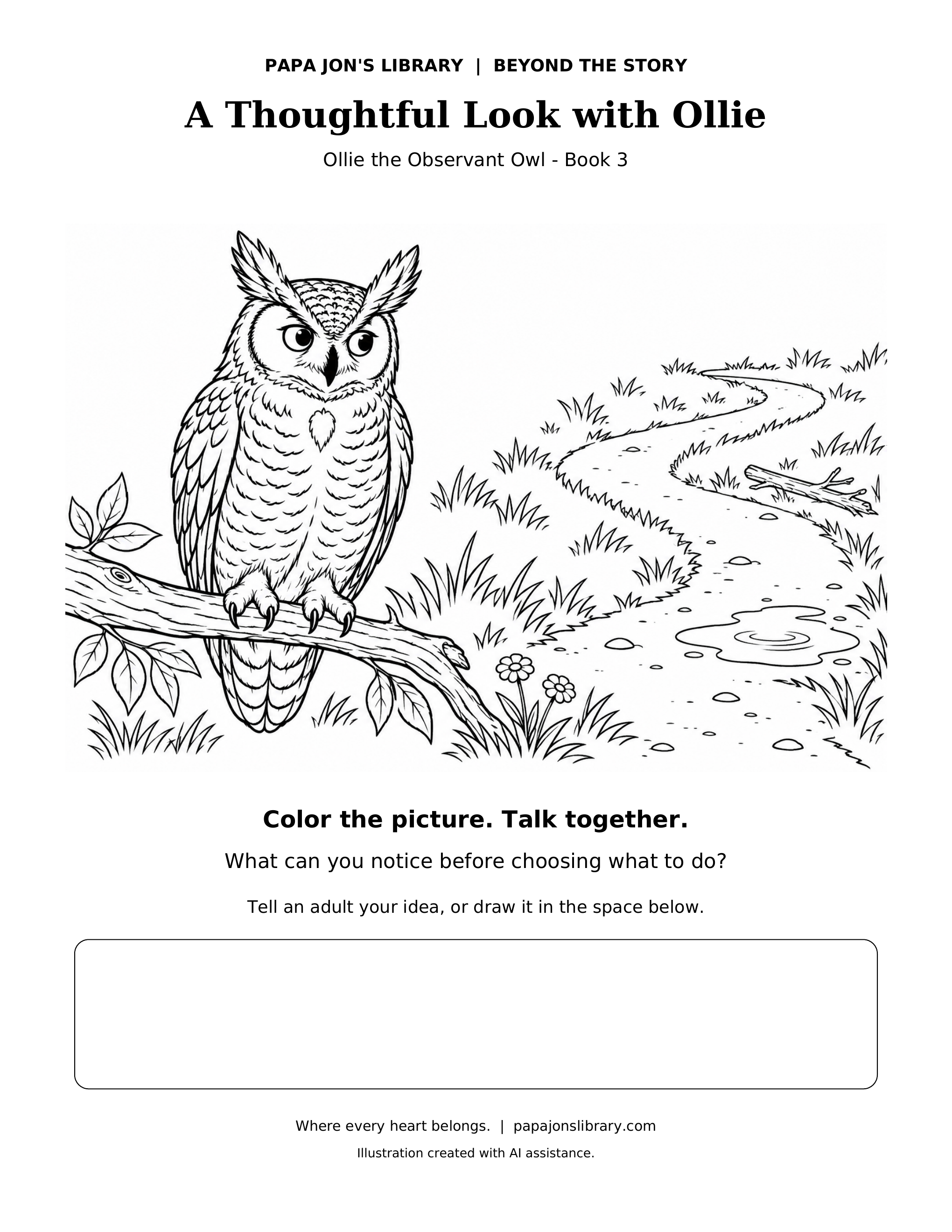
Adapt the conversation to your child or group
Younger children: Ask the child to point to something Ollie can see. Use a familiar task to practice one small beginning with adult help.
Older children: Compare a possibility with an observation, and discuss how new information can change a decision.
Children can choose a pretend example rather than share a personal worry.
Read further · For adults
Continue your own learning
- Reading Rockets · Dialogic Reading: An Effective Way to Read Aloud with Young Children
Grover J. Whitehurst explains ways to invite and expand children’s contributions during shared reading.
- NAEYC · Teaching Emotional Intelligence in Early Childhood
Tominey, O’Bryon, Rivers, and Shapses discuss recognizing feelings and exploring their causes, including through book characters.
- NAEYC · Building Social and Emotional Skills at Home
Practical ideas for families to explore feelings, relationships, and cooperation.
These references support the adult discussion approach. They do not evaluate or endorse Papa Jon’s Library books.