Book 4 · Discussion & activities
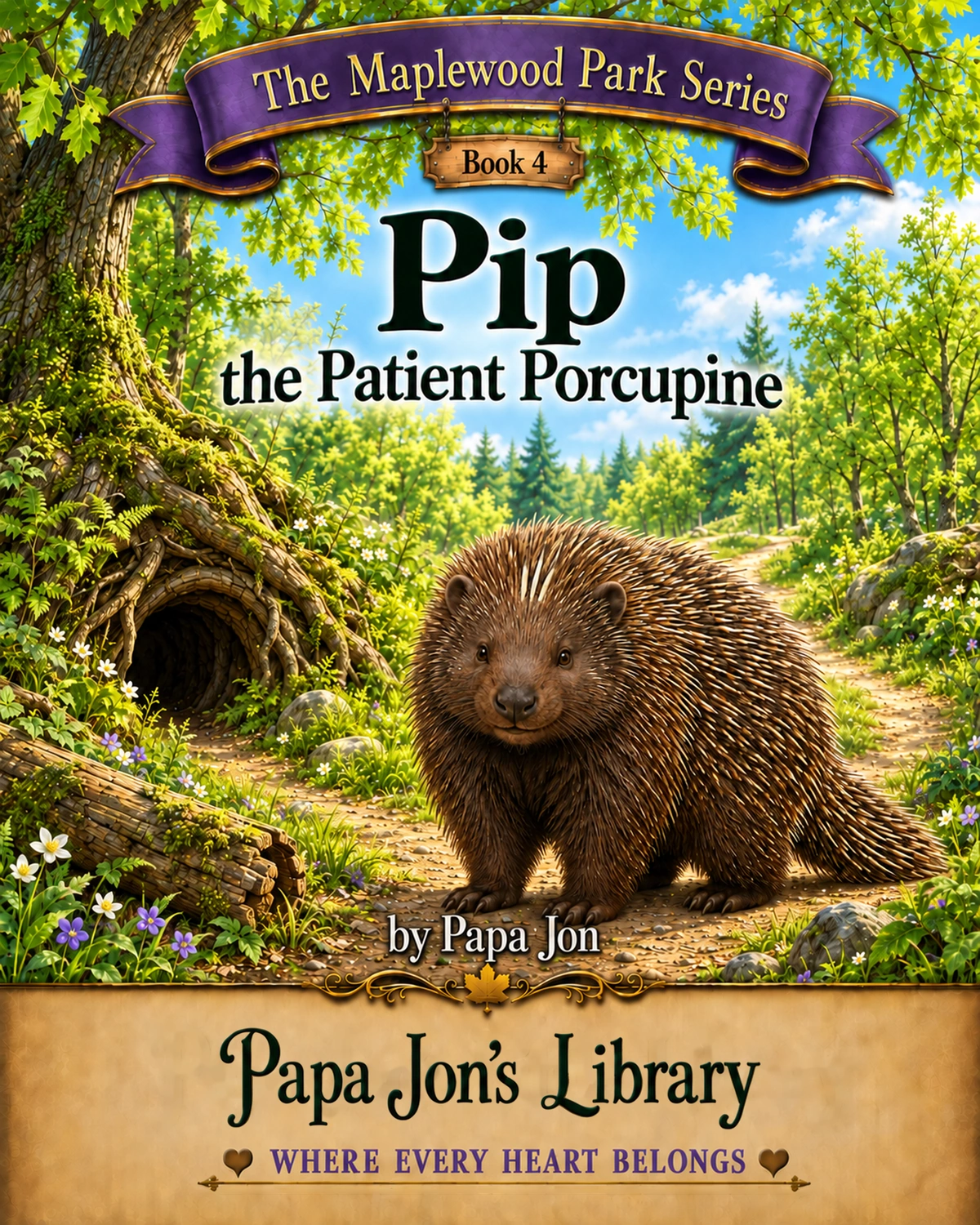
Pip the Patient Porcupine
Patience makes room for rest, help, and another careful step.
Pip sets out to find a maple sapling he remembers from the spring before. The journey takes longer than he expected, and familiar friends encourage him as he looks for a place that has changed.
Read the story first, then choose a question. Invite children to explain their ideas using a detail from the words or pictures.
01 · Remember the story
What helped Pip recognize the place where the sapling had grown?
An answer to explore
He remembered a pale stone near a bend in the fence. When he found the stone, a healthy young maple stood beside it, taller and fuller than the sapling he remembered.
Return to the story: Revisit pages 20–21. Why might Pip have missed the tree if he had looked only for something tiny?
02 · Think a little deeper
How did resting beside Barnaby help Pip continue his search?
An answer to explore
Pip’s feet were tired, and he wondered whether he had taken the wrong path. Barnaby listened and suggested resting before deciding where to look next. As Pip rested, his strength slowly returned, and he remembered that the sapling was farther beyond the meadow, along the way to the Thompson family home.
Follow-up: Can taking a break be part of working toward something? Which details show that Pip was still interested in finding the tree?
Return to the story: Compare pages 13–15.
03 · Carry it with you
What could you do when something worthwhile takes longer than you expected?
An answer to explore
You could pause, tell a trusted adult what feels difficult, ask for help, or try one manageable part after a break. You can also reconsider your plan when you learn something new.
Follow-up: What kind of encouragement would help you? People may need different amounts of time and different kinds of support.
For the adult: patience, flexible thinking, and support
Pip’s patience includes action and reflection. He listens to clues, notices that the meadow has changed, rests when tired, and welcomes help. The conversation can explore how a goal stays meaningful while the way of reaching it changes.
Pages 20–21 also invite a discussion about memory and growth: Pip remembers a tiny sapling, but the living tree has grown. Ask children what stayed recognizable and what changed, rather than treating an imperfect memory as a personal failing.
Keep the emphasis on supported effort. Patience should not mean ignoring discomfort, withholding help, or requiring a child to finish every task. A break, a different approach, or a decision to stop can be thoughtful choices. The suggested answer is a starting point; invite other interpretations supported by the story.
Try it together · 2 minutes
A pause in the plan
Choose a small puzzle or block arrangement together. Pause partway through and ask, “What would help next?” Try a break, a new piece, or working together. Talk about which choice helped.
Notice the picture
A clue beside the tree
Look at page 21 for the pale stone and the young maple. Ask which detail helped Pip find the place and which details show that the tree has grown.
Color & talk
One careful step with Pip
Color Pip beside the young maple and its pale stone. His three outlined identifying quills on his forehead can be colored cream. Then discuss what helps when a task takes time.
One page · US Letter (8½ × 11 inches) · Black-and-white
Open & print coloring page Download PDF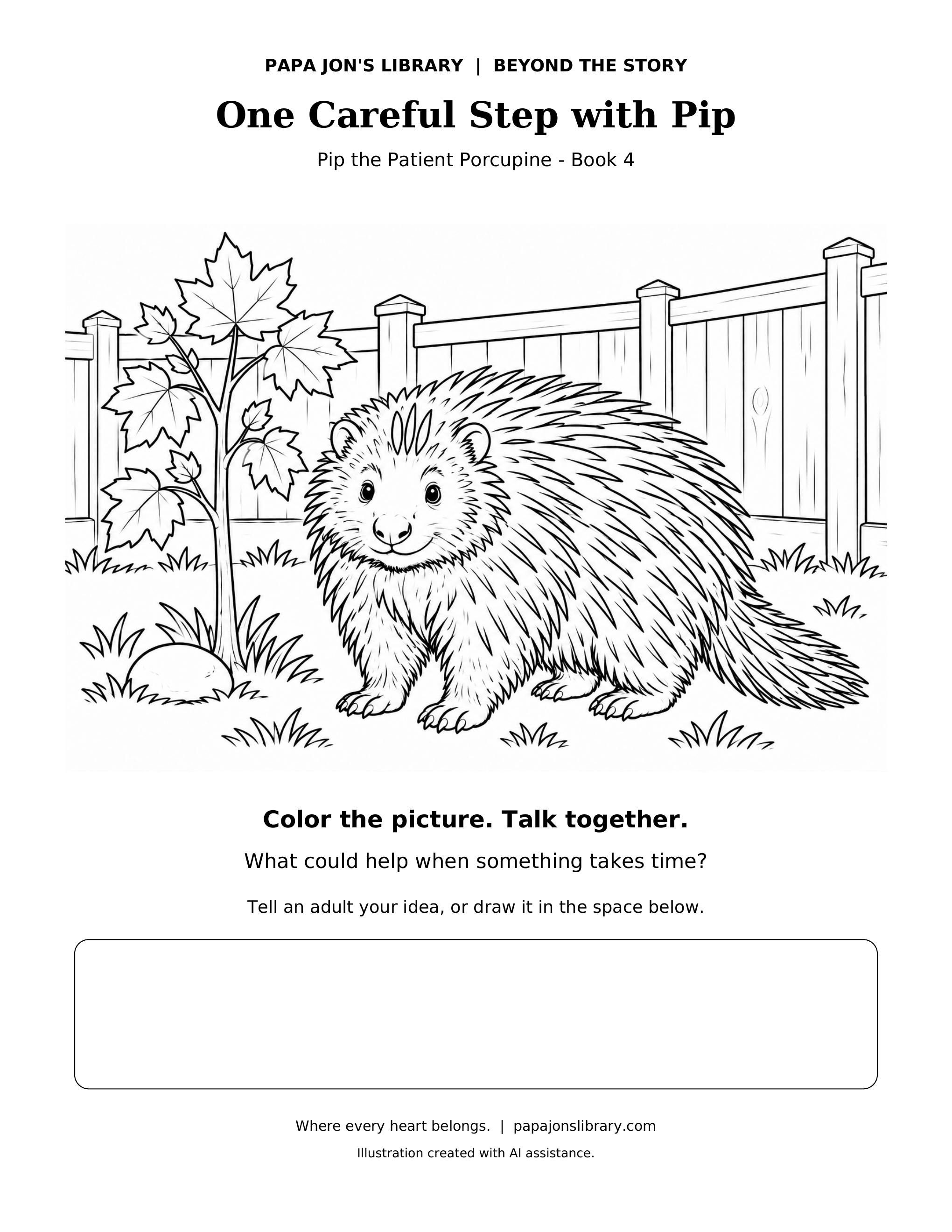
Adapt the conversation to your child or group
Younger children: Point to Pip, the tree, and the stone. Ask what Pip could do when his feet felt tired.
Older children: Trace how Pip’s clues and plan changed. Discuss how rest, help, and persistence can work together.
Children can use a pretend example rather than share a personal difficulty.
Read further · For adults
Continue your own learning
- Reading Rockets · Dialogic Reading: An Effective Way to Read Aloud with Young Children
Grover J. Whitehurst explains ways to invite and expand children’s contributions during shared reading.
- NAEYC · Teaching Emotional Intelligence in Early Childhood
Tominey, O’Bryon, Rivers, and Shapses discuss recognizing feelings and exploring their causes, including through book characters.
- NAEYC · Building Social and Emotional Skills at Home
Practical ideas for families to explore feelings, relationships, and cooperation.
These references support the adult discussion approach. They do not evaluate or endorse Papa Jon’s Library books.