Book 5 · Discussion & activities
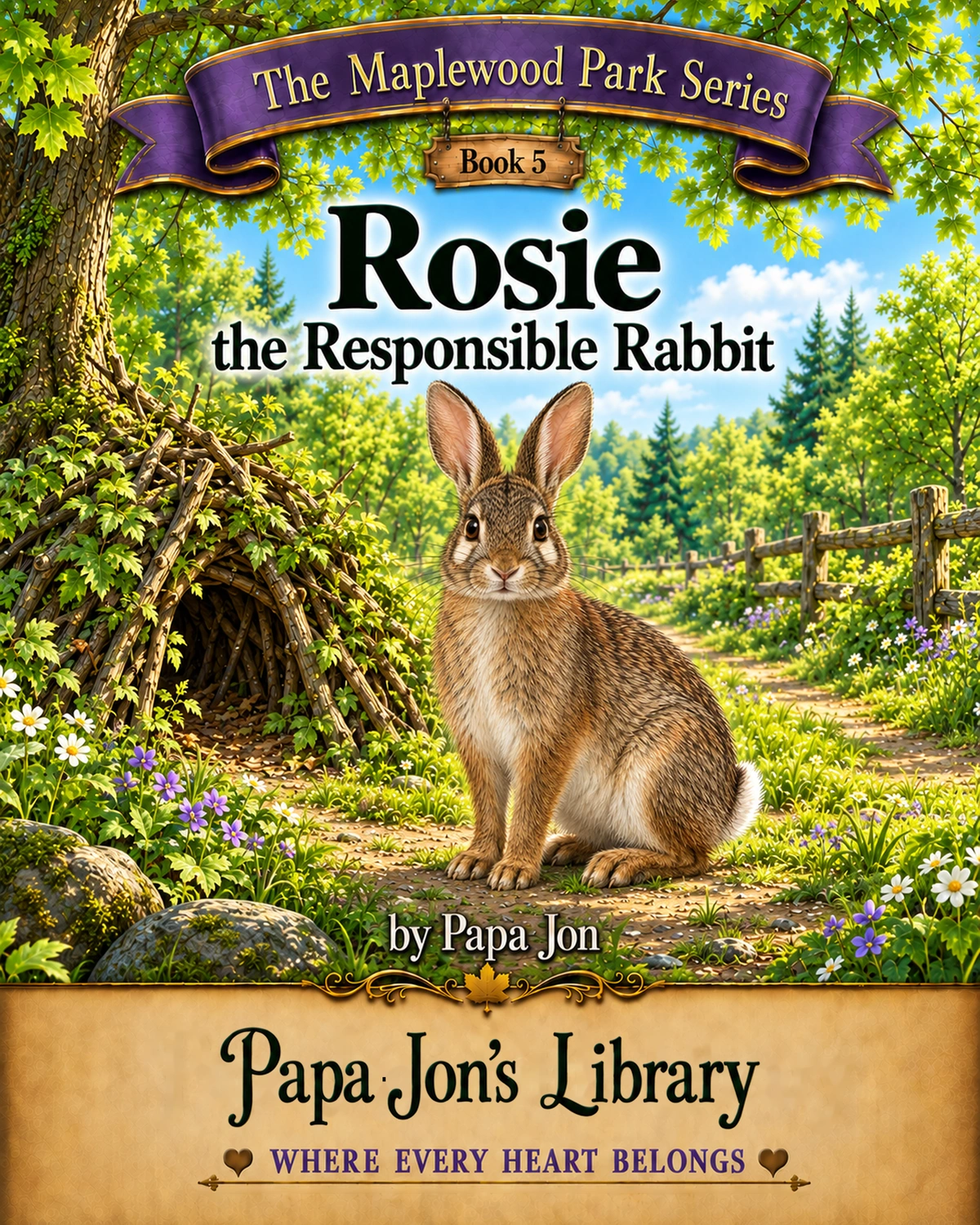
Rosie the Responsible Rabbit
Doing your part includes knowing when to welcome help.
After a windy night, Rosie notices many things needing care. She tries to take care of everything herself before meeting Barnaby. With help from Barnaby and Mr. Thompson, she makes a smaller, clearer plan.
Read the story first, then choose a question. Invite children to explain, point to a detail, or offer another idea supported by the story.
01 · Remember the story
How did Rosie, Barnaby, and Mr. Thompson share the work?
An answer to explore
Mr. Thompson repaired the fence and moved the large branch. Rosie and Barnaby gathered the little twigs together. Rosie restored her shelter, choosing where the materials belonged, while Barnaby brought her a few small twigs.
Return to the story: Revisit pages 17–19. Which jobs needed different abilities?
02 · Think a little deeper
Why was Rosie’s smaller plan a better one?
An answer to explore
Her first plan left her hurrying between unfinished tasks and feeling tired. The new plan matched the work to what each person could do. Rosie still had an important part, and accepting help made room for finishing the work and spending time with Barnaby.
Follow-up: Did noticing a problem mean Rosie had to solve it all by herself? What did she learn about asking for help?
Return to the story: Compare pages 10–11 with pages 16–22.
03 · Carry it with you
What could you say when you have promised something but need help?
An answer to explore
You might say, “I want to do my part, but I need help with this,” or “This is taking longer than I expected. Can we make a plan together?” Tell the person waiting for you what has happened, and ask a trusted adult when a job feels unsafe or too difficult.
Follow-up: How could you respond kindly if a friend asked you for help?
For the adult: responsibility, limits, and shared contribution
Rosie’s difficulty begins with a caring intention. She notices real needs but assumes she must handle every solution. Invite children to distinguish noticing, communicating, and personally completing a task: each can be a useful contribution.
Barnaby listens before offering a new perspective. Mr. Thompson helps Rosie consider what is hers to do, what can be shared, and what needs someone else. Discuss how their support leaves Rosie meaningfully involved rather than taking every job away from her.
Use age-appropriate examples with adult support. Children should not be expected to handle dangerous repairs, manage adult responsibilities, or earn belonging through useful work. Rosie’s friendship, rest, and enjoyment matter alongside the completed jobs. The references below offer broader reading about conversations and emotional understanding; these prompts are our original interpretation of the story.
Try it together · 2 minutes
Make a shared plan
An adult and a child can imagine tidying an art table together. Choose one job the child could do, such as putting crayons in a box; one job they could do together, such as sorting paper; and one job for the adult, such as safely putting away sharp scissors. Talk about when the child could ask for help.
Notice the picture
Different jobs, one caring plan
Look at page 18. Find the little twigs, the fence, and the large branch. How do their size and the characters’ actions help explain who handles each job?
Color & talk
A caring plan with Rosie
Color Rosie beside her brush shelter. Her two outlined cheek patches can be colored cream. Then talk about doing your part and asking for help.
One page · US Letter (8½ × 11 inches) · Black-and-white
Open & print coloring page Download PDF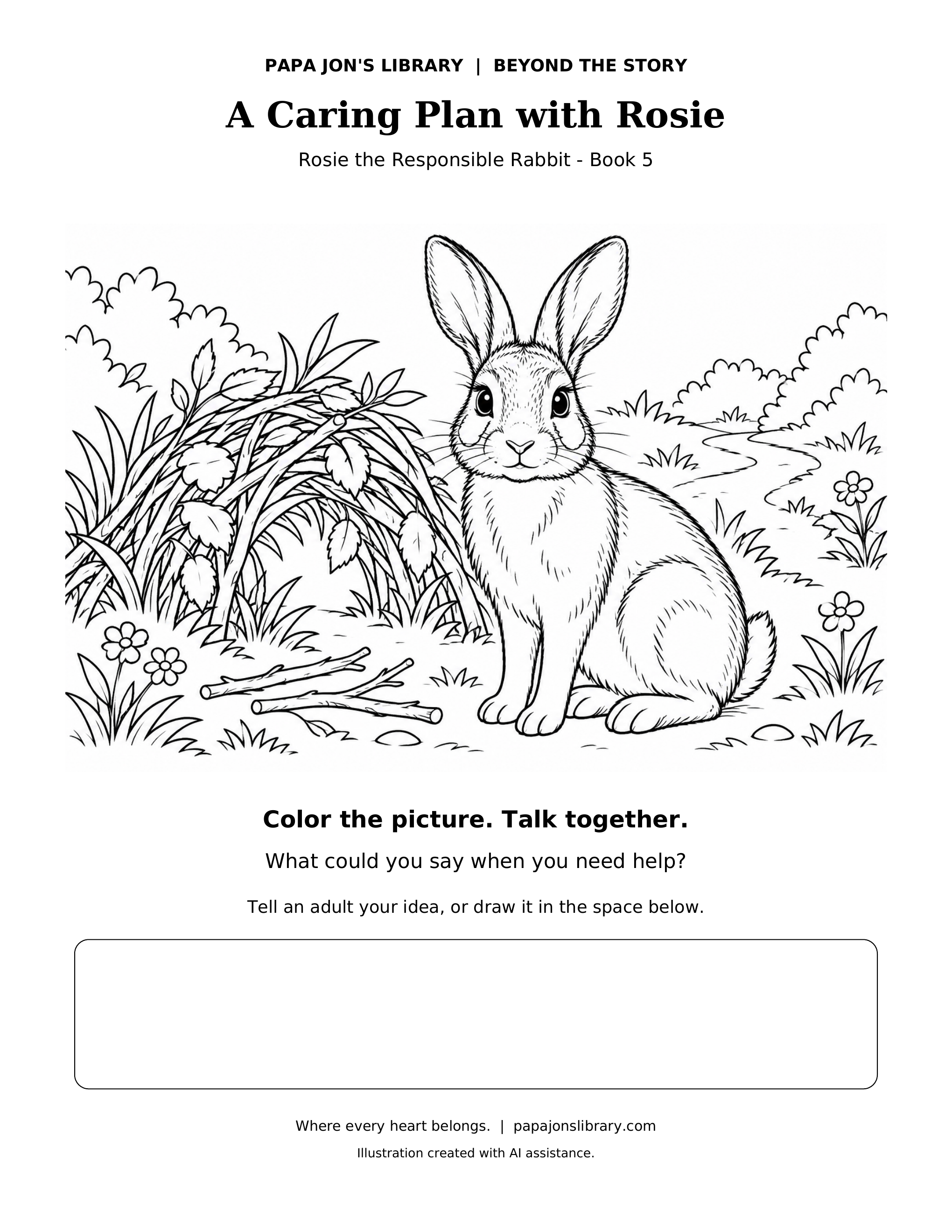
Adapt the conversation to your child or group
Younger children: Point to a small twig and ask who could help Rosie. Practice saying, “Can you help me?” in a pretend situation.
Older children: Discuss how asking for help and updating a promise can show honesty and care. Compare the first plan with the shared plan.
Children can discuss a pretend task rather than share a personal difficulty or a missed promise.
Read further · For adults
Continue your own learning
- Reading Rockets · Dialogic Reading: An Effective Way to Read Aloud with Young Children
Grover J. Whitehurst explains ways to invite and expand children’s contributions during shared reading.
- NAEYC · Teaching Emotional Intelligence in Early Childhood
Tominey, O’Bryon, Rivers, and Shapses discuss recognizing feelings and exploring their causes, including through book characters.
- NAEYC · Building Social and Emotional Skills at Home
Practical ideas for families to explore feelings, relationships, and cooperation.
These references support the adult discussion approach. They do not evaluate or endorse Papa Jon’s Library books.